

Coming soon in paperback and Kindle
Why Isn’t My Child Talking?
What Biology Can Tell Us About Speech Delay, Behavior, Regression, and the Nervous System
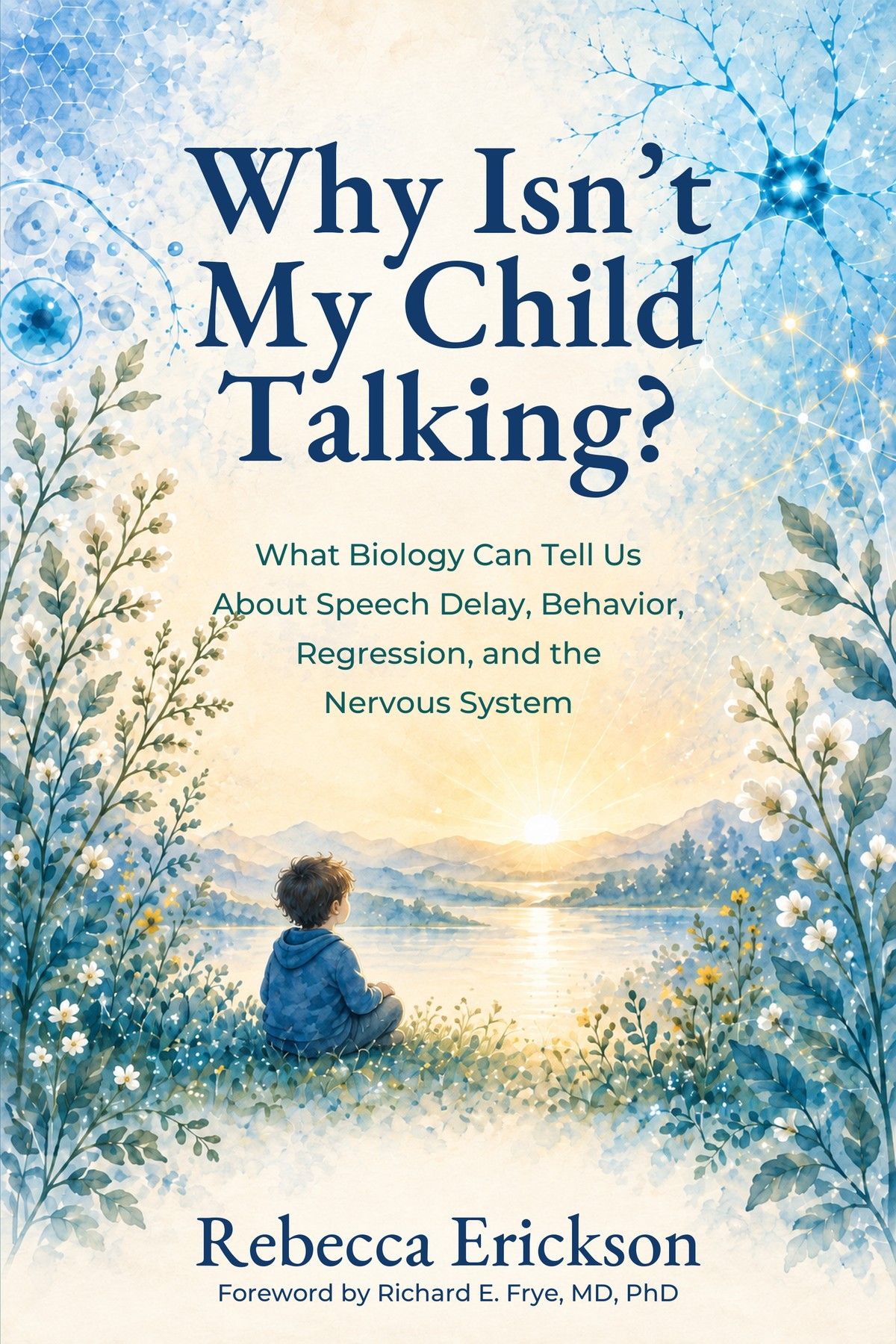
Foreword by Richard E. Frye, MD, PhD

At the time, I thought speech was the problem. Looking back, speech was the messenger.
Speech is rarely just about speech
When a child struggles with speech, behavior, sleep, attention, or regulation, parents are often told to wait, manage symptoms, or focus only on therapy. But what if biology is part of the story? In this book, Rebecca Erickson explores how oxidative stress, energy production, methylation, cell signaling, gut health, and nervous system support may influence a child’s ability to communicate, connect, and thrive.
Written for parents in clear, compassionate language, this book offers a framework for understanding why some children are overwhelmed and what supportive steps may help.
Inside the book
Twenty-six chapters in three parts. The book moves the way understanding came to Rebecca: from what daily life looked like, to the biology underneath it, to what the body needed first.

Part I, chapters 1–13
When Life Becomes Survival
Before I understood the biology, I only knew what life looked like on the outside.
- Chapter 1: Why Isn’t My Child Talking?
- Chapter 2: When Eating Shrinks
- Chapter 3: When Speech or Movement Doesn’t Develop as Expected
- Chapter 4: The Signs We Were Told Were Normal
- Chapter 5: The Nervous System in Protection Mode
- Chapter 6: Energy, Oxidative Stress, and Regulation
- Chapter 7: Fight-or-Flight Isn’t a Behavior
- Chapter 8: What Helps During Fight-or-Flight
- Chapter 9: Repair Comes After the Body Settles
- Chapter 10: When Movement Skills Are Delayed
- Chapter 11: When the Pause Is Missing
- Chapter 12: Nighttime Bedwetting Isn’t a Choice
- Chapter 13: Toileting a Child Who Can’t Communicate
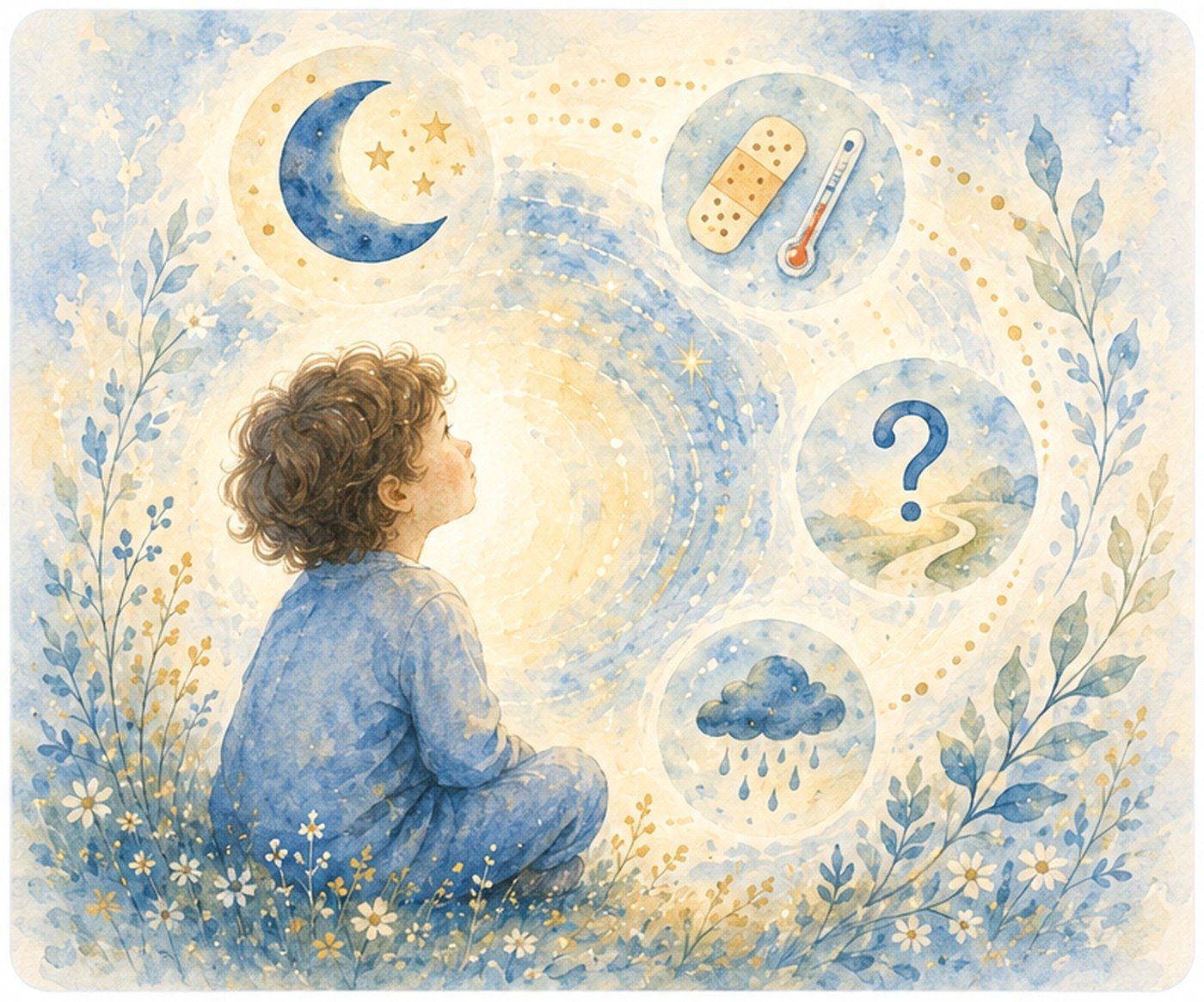
Part II, chapters 14–22
Understanding the Biology
The story came first. Now I began learning what might have been happening underneath it.
- Chapter 14: When Immune Activation Adds to the Load
- Chapter 15: Oxidative Stress Doesn’t Stop in Childhood
- Chapter 16: When the Brake Arrives Late
- Chapter 17: When the Same Biology Shows Up Differently
- Chapter 18: When Inflammation Shows Up in the Body
- Chapter 19: Gene Variants and Recovery Pace
- Chapter 20: When I Prayed to Hear Their Voices
- Chapter 21: The Test We Didn’t Understand
- Chapter 22: What Labs Can and Cannot Tell Us

Part III, chapters 23–26
From Understanding to Action
Once the pattern began to make sense, the next question was what the body needed first.
- Chapter 23: Pregnancy, Labor, and Cumulative Metabolic Load
- Chapter 24: When the Pattern Finally Made Sense
- Chapter 25: Why Order Matters
- Chapter 26: The Core Support Plan
Also inside: The Core Support Plan™ at a Glance, A Parent’s Guide to Key Terms, Research and Further Reading.
Read the Author’s Note and full contents
What early readers are saying
For my colleagues, I hope this book is a reminder of how much families can teach us.
From basic science to practical approaches to treatment, the book provides an accurate and readable form of structured guidance for others who face similar challenges.
With examples from daily family life, Rebecca explores the connection between a state of fight or flight and the process of returning to regulated behavior and rational thinking.
I highly recommend this book to anyone that is interested in better understanding the non-speaking child.
As a physician who works with many children on the spectrum, I was very pleased to review and recommend Mrs Erickson’s book.
Why Isn’t My Child Talking? is the book I wish every parent could hold on the day of diagnosis. Warm, clear, and deeply informed, it turns overwhelming science into a hopeful, doable path forward.
Through personal stories and thoughtful reflection, it offers a compassionate perspective on autism, communication, and the belief that every child has something to say.
I came away feeling more hopeful, less alone, and excited to explore new possibilities for helping my own child.
I especially appreciated Rebecca’s honesty. She makes it clear that this book doesn’t offer promises or guarantees, but instead shares her experiences and what she has learned along the way.
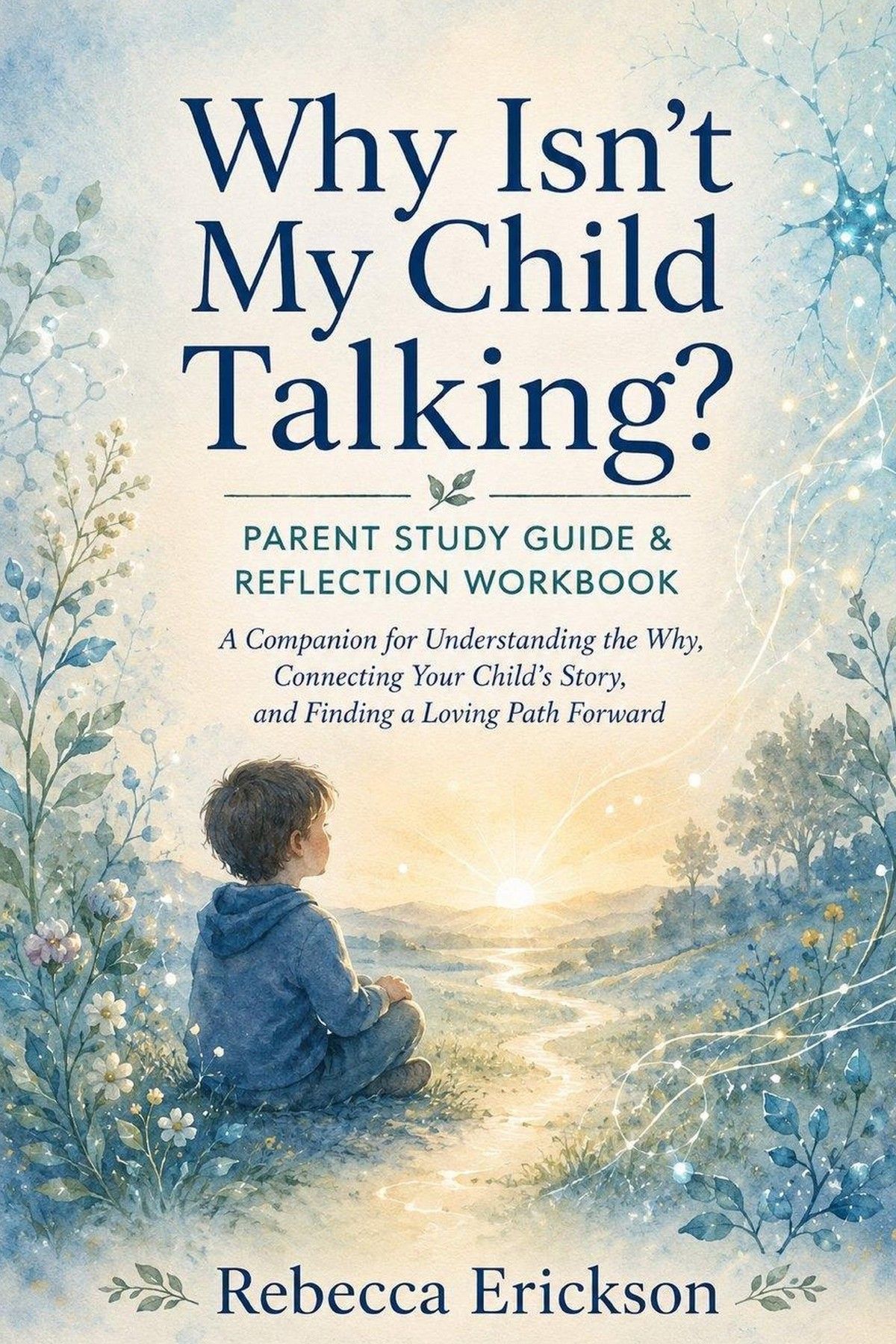
The companion workbook, coming soon in paperback
Parent Study Guide & Reflection Workbook
A Companion for Understanding the Why, Connecting Your Child’s Story, and Finding a Loving Path Forward
You will not be asked to diagnose your child, prove a cause, or invent a complete pattern. The book explains the ideas. The guide helps you remember, understand, release blame, recognize progress, and consider what a more supported response can look like now.
- Read the chapter
- Sit with the quote
- Choose one memory
- Write what you understand differently
- Name one truth or response to carry forward
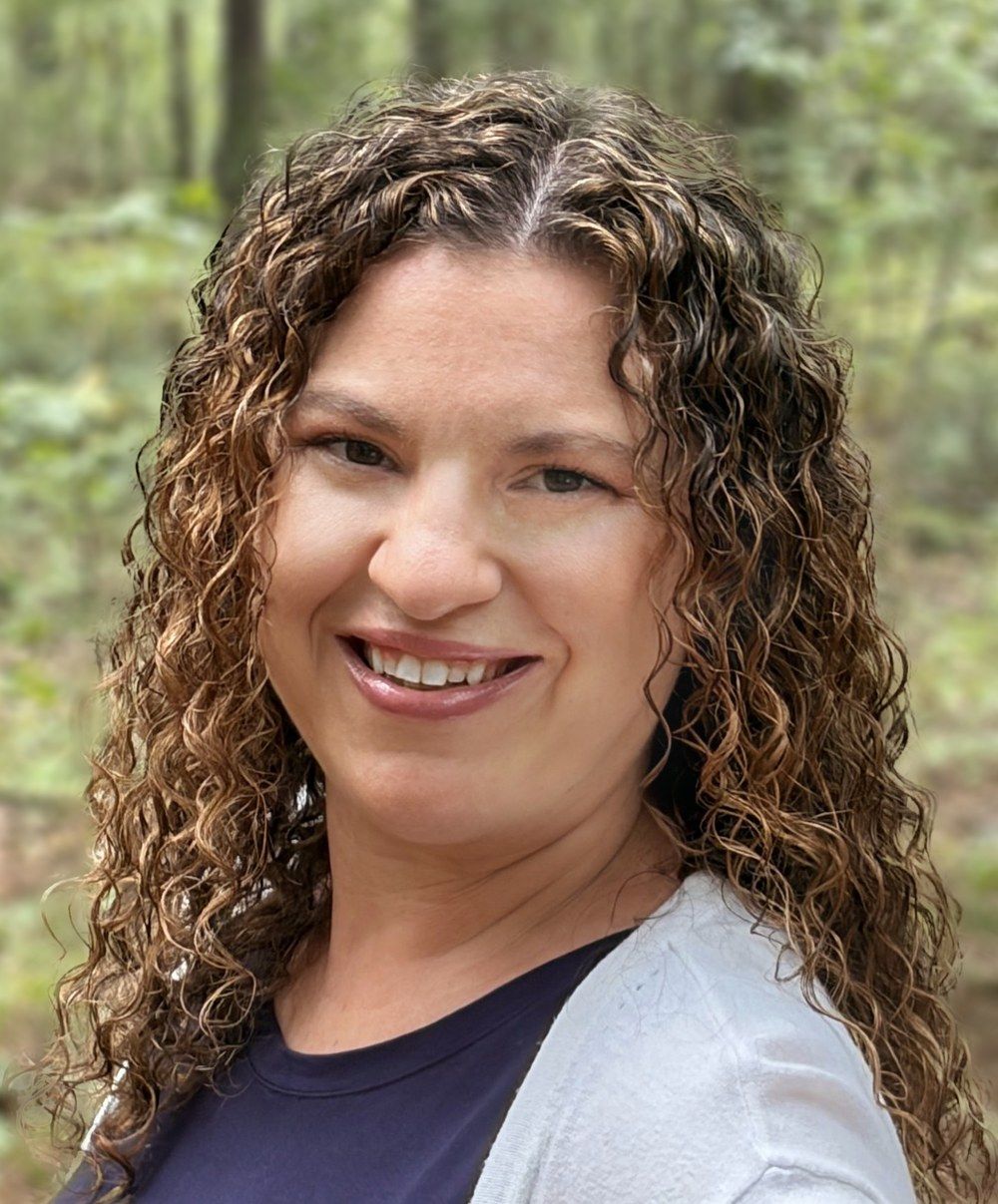
Meet Rebecca
Rebecca Erickson is a mother, researcher, and founder focused on helping families better understand the biology behind speech, behavior, and nervous system challenges.
She and her husband, Paul, have three children. Both of their sons were diagnosed with autism and did not begin speaking until they were four. Rebecca started researching because she wanted to understand them, and she wrote this book for the parent reading late at night, wondering what the science means for their child.

Questions parents ask
Who is this book for?
Parents and caregivers of a child who is not talking yet, has lost words, or is struggling with sleep, eating, behavior, sensory overload, or regulation. Rebecca’s family story includes autism and speech delay, but the patterns she describes are not limited to autism.
Therapists, teachers, and clinicians who work with these families may find it a helpful window into what parents see at home.
Do I need a science background to understand it?
No. The book is written for parents in plain language, with stories from daily family life and illustrations that explain the key ideas. A Parent’s Guide to Key Terms at the back explains the scientific words in everyday language.
Is this book medical advice?
No. It is an educational book that shares one family’s experience and the framework that helped them understand what they were seeing. It does not diagnose or treat any condition. Please talk with a qualified healthcare professional before starting, stopping, or changing any medication, supplement, therapy, or diet.
What is the Core Support Plan™?
It is the ordered framework Rebecca describes in Part III. It grew out of the Biological Order of Repair™: the idea that the body responds differently depending on what has already been stabilized underneath it, so the order of support matters. The book ends with the Core Support Plan™ at a Glance.
You can also explore the plan and its tools at AutismNutrients.com.
Who wrote the foreword?
Richard E. Frye, MD, PhD, a pediatric neurologist and autism researcher. He earned his MD and PhD at Georgetown University and trained in child neurology and behavioral neurology at Boston Children’s Hospital. His research looks for medical and biological problems that can make speech and development harder for a child, including differences in folate metabolism, cellular energy, and immune function.
In the foreword, he describes how families’ questions shaped his career. What parents noticed at home, especially changes in language, helped guide his research from the clinic to a placebo-controlled clinical trial. He explains why Rebecca’s story resonates with him: her attention to the details of daily family life, her plain-language look at the biology behind them, and her view of progress beyond spoken words.
He also notes that her framework should be considered alongside each child’s own medical history and care. He closes with encouragement for parents to share what they observe, and a reminder to his fellow physicians of how much families can teach them.
Is there a companion workbook?
Yes. The Parent Study Guide & Reflection Workbook follows all 26 chapters in order, with guided questions that help you connect the book to your own child’s story. It is meant to be read beside the book, not instead of it.
When is the book coming out?
Coming soon in paperback and Kindle. Sign up for the free sample and you will get an email when the release date is announced, and another when the book is available to order.
What is in the free sample?
A 21-page PDF with a short letter from Rebecca, the full table of contents, Chapter 1, and an excerpt from Chapter 21, “The Test We Didn’t Understand.” It arrives by email a minute or two after you sign up.

Read a free sample
Chapter 1, an excerpt from later in the book, and the full table of contents, sent straight to your inbox.